Game Engine Chip - Our First Manufactured Silicon
Complete ASIC Lifecycle: FPGA → Tape-Out → Manufacturing → Testing
Successfully Manufactured Silicon (2022-2024)
Motius's first custom chip - from FPGA prototype to manufactured silicon. Submitted for manufacturing in Q3 2022/Q1 2023, received 40 working chips in April 2024.
Project Overview
Objective: Design, manufacture, and validate a complete game engine (Pong) implemented in custom silicon
Timeline: Q1 2022 - Q4 2024 (33 months)
Result: 40 manufactured chips in M.2 QFN package, successfully tested and validated
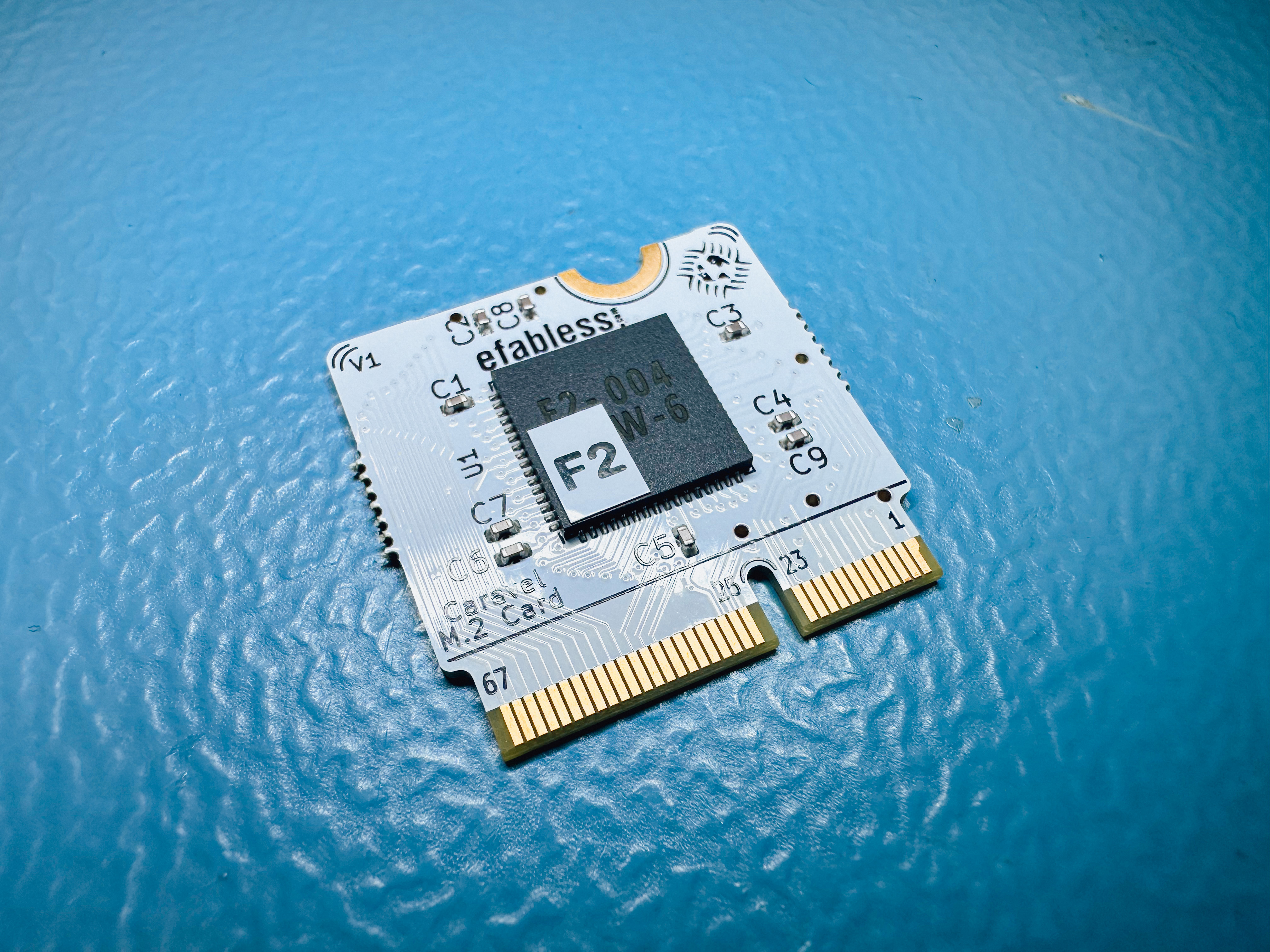
The manufactured Game Engine chip in M.2 module format - "F2" marking shows efabless fabrication
The Complete Journey
Phase 1: FPGA Prototype (Q1-Q2 2022)
Goal: Prove the concept works in hardware
-
Complete Game Engine in HDL
Designed and implemented the entire Game Engine game in hardware description language
-
VGA/HDMI Video Output
Real-time game display rendering with full timing control
-
Proximity Sensor Input
ST ToF (Time-of-Flight) sensor for player controls
-
Physics in Hardware
Game logic, collision detection, and scoring implemented in FPGA
Platform: AMD Xilinx Artix-7 FPGA (Nexys A7, Arty A7-100T boards)
Result: Working game engine running entirely in FPGA hardware
Phase 2: Tape-Out Preparation (Q3 2022 - Q1 2023)
Goal: Prepare the design for manufacturing
The Challenge: Google/efabless offered free chip manufacturing through their open-source program, but the Caravel toolchain was pre-alpha with minimal documentation.
| What We Learned | What We Did |
|---|---|
| Manufacturing design rules (PDK compliance) | Figured out the Caravel toolchain from scratch |
| Standard cell library requirements | Understood foundry component requirements |
| Voltage configuration and pin planning | Design rule checking and layout verification |
| Design-for-manufacturability principles | Prepared final submission for fabrication |
| Verification against foundry constraints | Navigated pre-alpha tools with limited docs |
Result: Successfully submitted design to efabless/Google open-source manufacturing program
Phase 3: Manufacturing & Testing (2023-2024)
The Wait: Nearly 2 years from submission to receiving chips. This is typical for pilot programs and shuttle runs. Many designs never get manufactured - ours did!
April 2024: Chips Arrived!
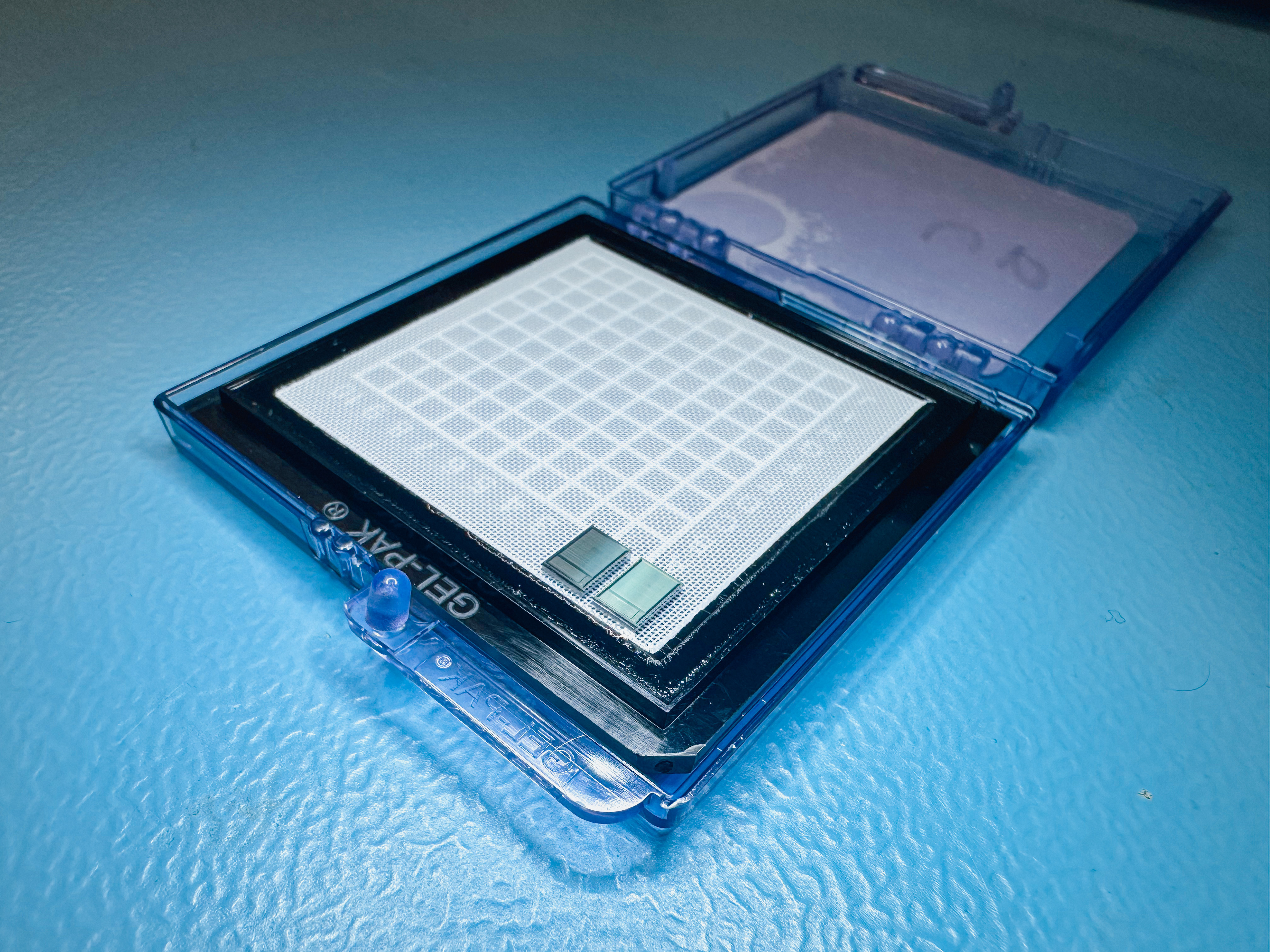
Opening the package reveals the actual silicon die - our custom game engine on real silicon
We received 40 chips in M.2 QFN package format with our design on actual silicon!
The Debug Challenge: Testing revealed an issue - VGA video worked perfectly ✅ but ToF sensor didn't respond ❌
-
The Problem
Pins connecting the ToF sensor were configured to the wrong voltage level during manufacturing. This was a configuration issue, not a functional logic problem.
-
The Solution
Instead of the chips becoming unusable, we modified the external interface electronics to match the voltage levels the pins provided. Successfully brought the Game Engine chip to life! 🚀
Phase 4: Production Board (Planned)
Next Step: Design a card-sized custom PCB integrating all 40 chips to showcase our hardware design capabilities and provide a physical demonstration of manufactured silicon at scale.
Key Components Developed
-
Display Controller
Custom VGA/HDMI video output controller for game rendering with full timing control
-
Collision Detection
Hardware-accelerated physics engine and collision detection in real-time
-
Rendering Pipeline
Complete graphics rendering pipeline implemented in silicon
-
Game Logic
Full game engine logic, scoring, and difficulty progression in hardware
Technologies & Tools
| Phase | Technology |
|---|---|
| FPGA Prototype | AMD Xilinx Artix-7 (Nexys A7, Arty A7-100T) |
| HDL | Verilog/SystemVerilog |
| Custom IP | Complete game engine (designed by Motius) |
| Sensors | ST ToF proximity sensor for player input |
| Tape-Out Tools | Google Caravel (open-source), efabless platform |
| Foundry | Google/efabless open-source shuttle program |
| Package | M.2 QFN form factor |
| Deliverable | 40 manufactured chips, tested and validated |
What We Learned
This project demonstrated the complete silicon development lifecycle. Here are the key insights:
-
PDK Compliance is Critical
Manufacturing rules must be followed precisely. This is completely different from functional correctness in FPGA.
-
Voltage Configuration Matters
Pin voltage levels must match peripheral requirements. Configuration errors can make chips unusable, but some issues can be worked around externally (as we did).
-
Testing is Essential
Manufactured silicon may have defects. Post-silicon validation is time-intensive but critical for finding and recovering from issues.
-
Timeline Reality: 18-24 Months
From submission to working chips is real, not theoretical. Manufacturing is an arduous process - be prepared for the wait.
-
Manufacturing ≠ Functionality
The manufacturing phase is about using manufacturing rules correctly. Many things can go wrong beyond your design logic.
Why This Matters
Most semiconductor consultants fall into two categories:
FPGA specialists never cross into actual silicon manufacturing. ASIC designers work for design houses but don't own the full lifecycle.
Motius has proven end-to-end capability:
Requirements → Design → FPGA Validation → Tape-Out → Manufacturing → Tested Silicon
This experience is invaluable for ASIC preparation projects.
What This Means for Your Project
-
Real Experience
We've submitted designs for tape-out, waited through manufacturing, debugged manufactured silicon, and recovered from manufacturing defects.
-
Accurate Timelines
We understand real timelines (18-24 months), not theoretical ones. Better preparation means realistic expectations.
-
De-Risked Process
Proven relationships with manufacturing partners (Google/efabless). We know what foundries actually need and how to navigate issues.
-
Complete Lifecycle
From requirements to tested silicon, we've done it. We can guide you through every phase of ASIC development.
Open Source
The Manufactured Result
-
Manufactured Silicon
Actual silicon die visible inside the QFN package
-
M.2 Module Format
Production-ready M.2 form factor with efabless fabrication
Status: 40 manufactured chips received, tested, and validated
Next Steps: Production board development to showcase all 40 chips on a single demonstration platform