eMil - Machine Learning System on RISC-V
Government-Funded Research Project (2022 - Today)
BayVFP-Funded Research
Research project funded by the Bayerisches Verbundforschungsprogramm (BayVFP) des Freistaates Bayern; Förderlinie "Digitalisierung"
Project Overview
Funding: Bayerisches Verbundforschungsprogramm (BayVFP)
Partners: Perif and Motius (partially covering development costs)
Timeline: 2022 - Today (Ongoing)
Type: Research & Development
Objective: Design and build a machine learning system that is networked across different levels, from sensors to the cloud, and optimized as a whole.
Status: Functionality phase (FPGA) - did not proceed to manufacturing
Multi-Level ML Architecture
The project aimed to create an end-to-end ML processing pipeline optimized for edge computing:
Sensors → Edge Processing (RISC-V + FFT) → Network → Cloud
-
Edge ML Processing
Machine learning workloads running on RISC-V at the edge
-
FFT Accelerator
Custom hardware for sensor data preprocessing
-
System-Wide Optimization
End-to-end optimization across the entire pipeline
-
Real-Time Signal Processing
Hardware acceleration for radar applications
Development Workflow
We figured out what the project needed, built the architecture, and implemented it successfully through multiple phases:
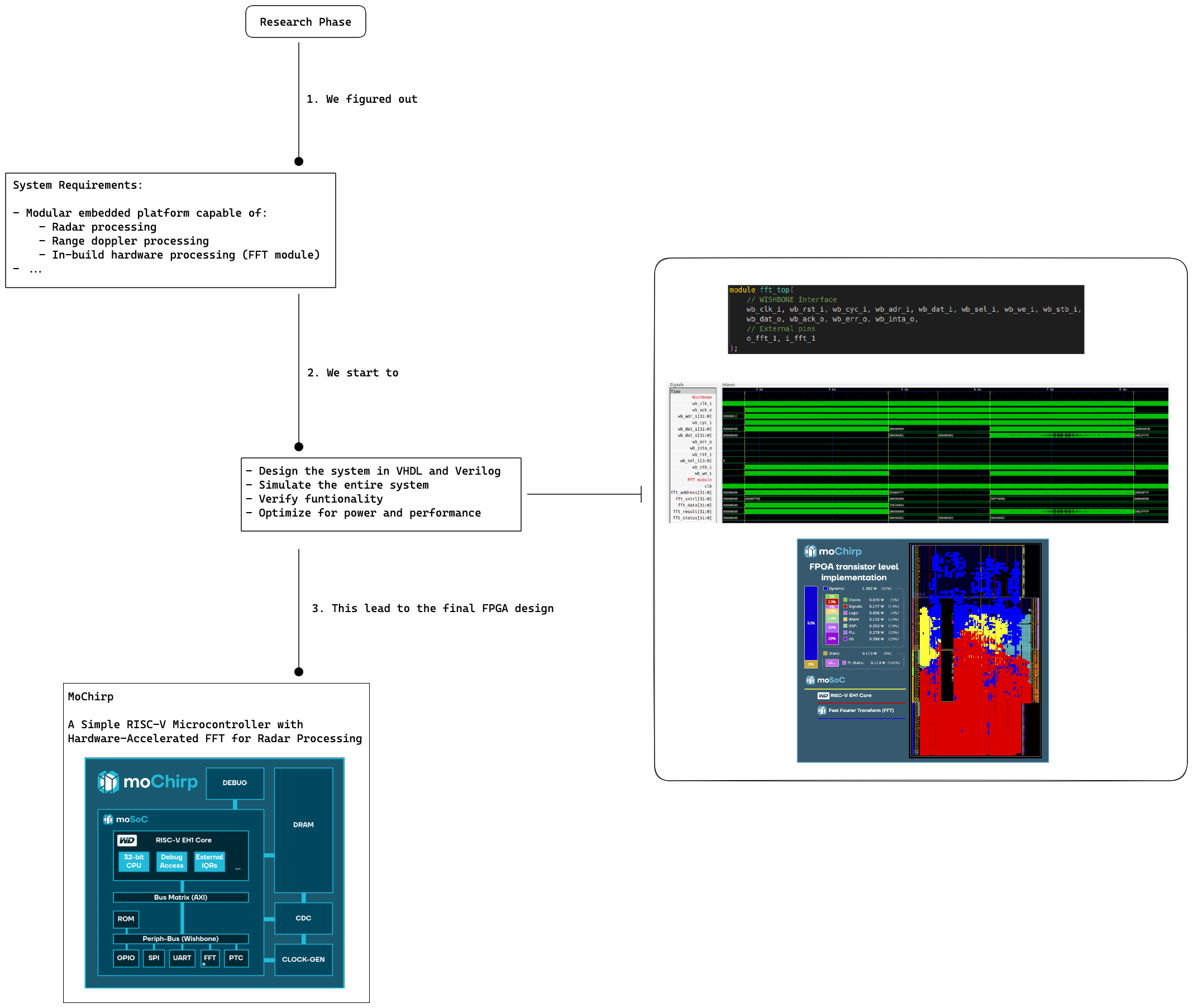
Development Phases: 1. Requirements gathering - Analyzed embedded platform capabilities for radar processing 2. System design - Designed the system in HDL and verified functionality 3. Hardware implementation - Built and optimized the design for FPGA 4. Validation - Tested performance and validated ML workload processing
System Architecture: moSoC (Motius System-on-Chip)
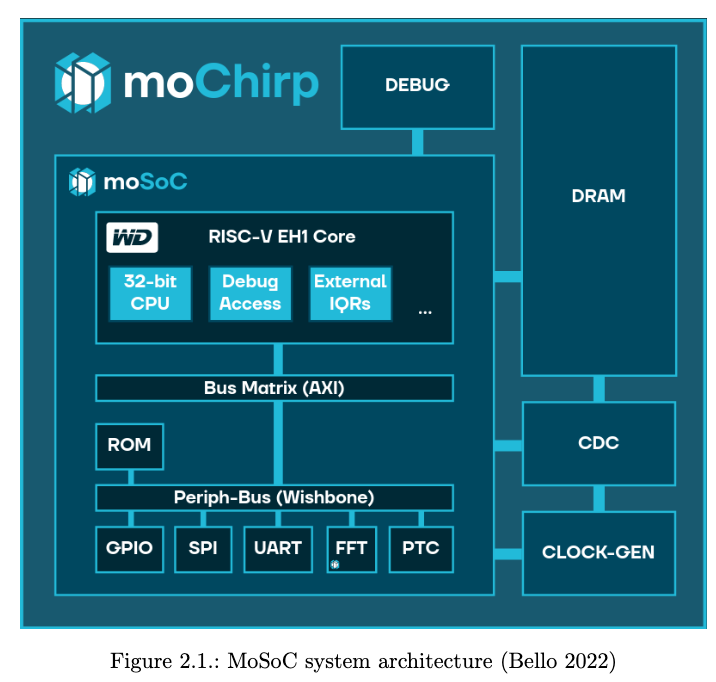
moChirp System Components:
-
Western Digital RISC-V EH1 Core
32-bit RISC-V CPU with debug access and external I/Os
-
Memory Hierarchy
ROM, DRAM controller for high-bandwidth data processing
-
Dual Bus Architecture
AXI bus matrix for high-speed transfers, Wishbone peripheral bus
-
Custom FFT Accelerator
Hardware-accelerated Fast Fourier Transform designed by Motius
-
Communication Interfaces
UART, SPI, GPIO for sensor and debug connectivity
-
Support Modules
PTC (Programmable Timer Counter), CDC (Clock Domain Crossing), CLOCK-GEN
Custom FFT Accelerator
Purpose: Hardware-accelerated Fast Fourier Transform for sensor signal processing
FFT Architecture
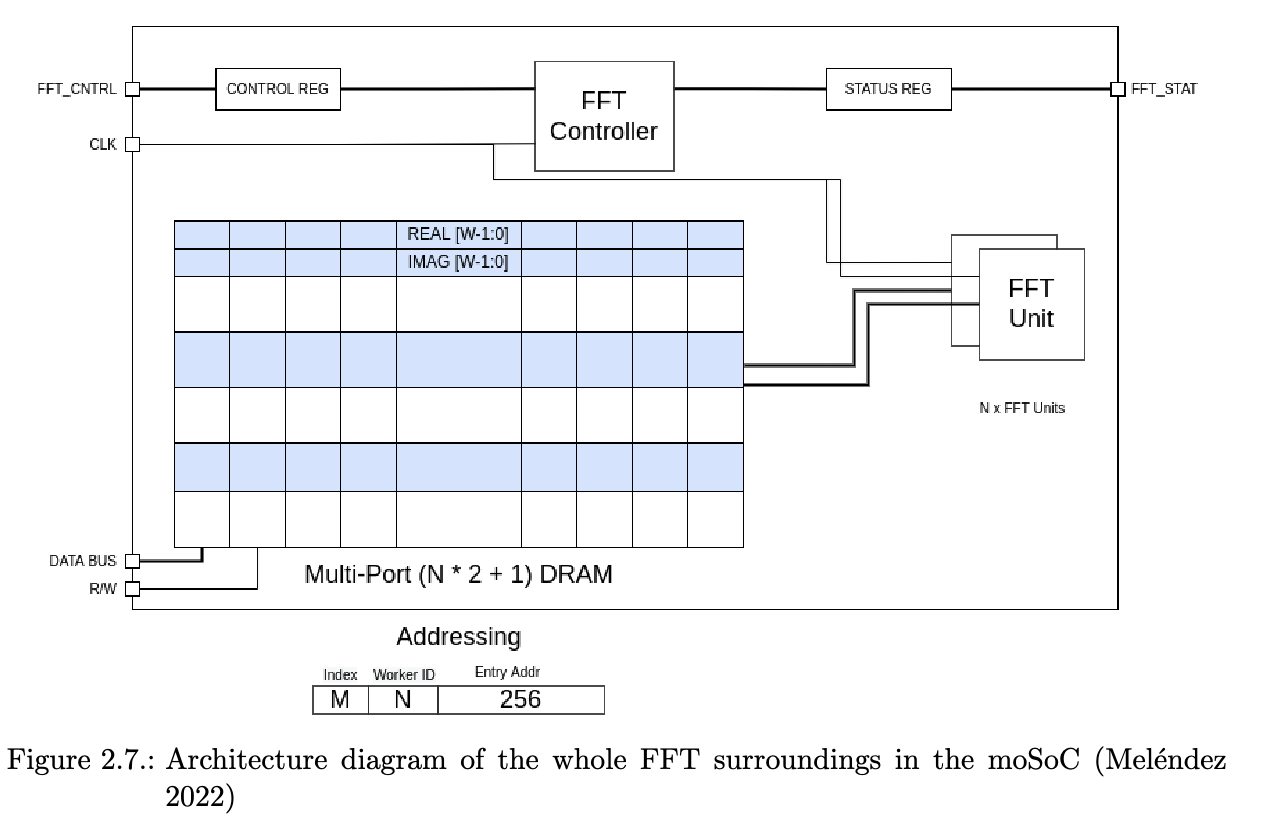
Design Features:
-
Multi-Port DRAM
Efficient data access architecture with multiple ports
-
Configurable Controller
FFT controller with adjustable parameters
-
Complex Data Support
REAL and IMAGINARY data channel processing
-
Pipelined Computation
Parallel FFT computation units for throughput
-
Optimized Addressing
Smart addressing (Index, Worker ID, Entry Address)
Implementation:
Designed custom FFT IP core in HDL from scratch. Integrated with RISC-V CPU via Wishbone bus. Optimized for real-time edge processing with memory-efficient multi-port DRAM architecture.
FPGA Implementation
Resource Utilization
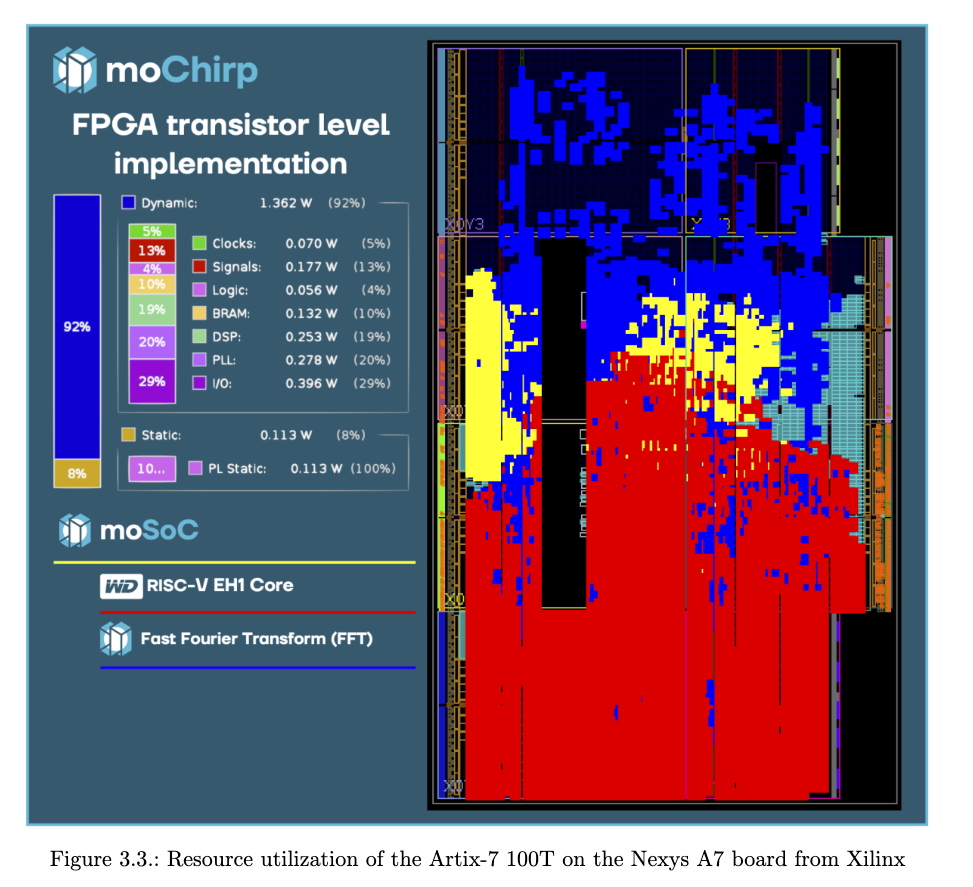
Hardware Platform: AMD Xilinx Artix-7 (Nexys A7)
System Integration:
Complete SoC with RISC-V CPU, custom FFT IP, and peripherals running at 100MHz on FPGA. Pipelined FFT computation enables low-latency sensor data processing.
Technical Validation
FFT Waveform Analysis
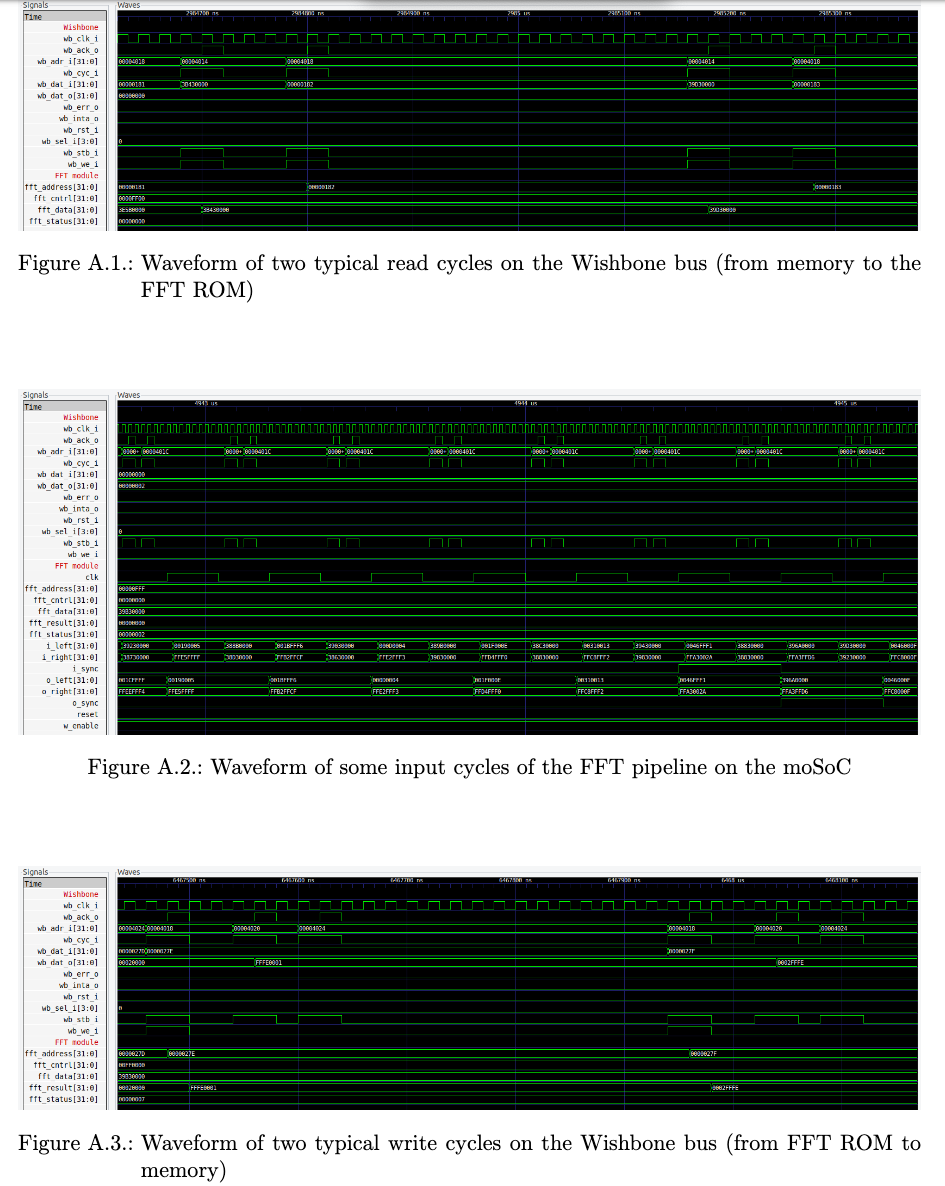
Testing and Verification:
Validated typical read cycles on Wishbone bus (memory to FFT ROM), input cycles of FFT pipeline on moSoC, and write cycles (FFT ROM to memory). Complete functional validation of the FFT accelerator confirmed 100MHz operation on FPGA with real-time signal processing and successful ML workload execution.
Technologies & Tools
| Category | Technology |
|---|---|
| FPGA | AMD Xilinx Artix-7 (Nexys A7 board) |
| CPU Core | Western Digital RISC-V EH1 (32-bit) |
| Custom IP | FFT accelerator (designed by Motius) |
| Bus Architecture | AXI bus matrix, Wishbone peripheral bus |
| Peripherals | UART, SPI, GPIO, DRAM controller, PTC |
| Memory | ROM, DRAM with multi-port architecture |
| Debug | JTAG debug interface, external I/Os |
Key Achievements
-
RISC-V ML System
Built complete ML processing system on RISC-V, demonstrating edge ML feasibility with custom acceleration. Integrated multiple open-source IP modules and achieved target performance on FPGA.
-
Custom FFT Accelerator
Designed and verified FFT IP core from scratch for hardware-accelerated sensor signal processing. Optimized for low-latency edge computing and successfully integrated with RISC-V CPU.
-
System Integration
Complete SoC architecture with CPU, custom IP, and peripherals. Multi-level bus architecture (AXI + Wishbone), memory hierarchy (ROM, DRAM), and comprehensive peripheral set.
Research Insights
-
Edge ML on RISC-V
RISC-V is viable for edge ML workloads when paired with custom acceleration. The open-source IP ecosystem is mature enough for research, and FPGA prototyping effectively validates concepts before silicon.
-
Custom IP Development
HDL design for ML acceleration requires careful optimization. Bus interface standards (AXI, Wishbone) enable modularity. Simulation and verification are critical, as integration testing reveals timing and resource challenges.
-
System-Wide Optimization
Optimize across the sensor → edge → cloud pipeline. Balance CPU processing with hardware acceleration. Memory bandwidth is often the bottleneck, and power efficiency requires early architectural decisions.
Project Status
Current Phase: FPGA functionality phase (ongoing)
Achieved: RISC-V system functional on FPGA, custom FFT accelerator validated, ML workloads demonstrated, and system-wide integration complete.
Not Pursued: Manufacturing and tape-out were not pursued. This research project focused on validation and feasibility rather than production manufacturing.
Documentation & Resources
Internal Resources
GitLab Repository: gitlab.motius.de/motius-silicon/Motius-radar-processing
Documentation: docs-motius-silicon.apps.motius.ci
Impact on Motius Capabilities
-
RISC-V Experience
Proven ability to integrate Western Digital RISC-V cores with deep experience in the open-source RISC-V ecosystem and understanding of RISC-V for ML workloads.
-
Custom IP Development
FFT accelerator design expertise and ML acceleration hardware design. Experience integrating custom IP with standard buses (AXI, Wishbone).
-
Research Capabilities
Government-funded project experience with academic and research partnerships. Strong publication and technical documentation skills.